Episode 5: Reservations
lesson resources
EPISODE DESCRIPTION
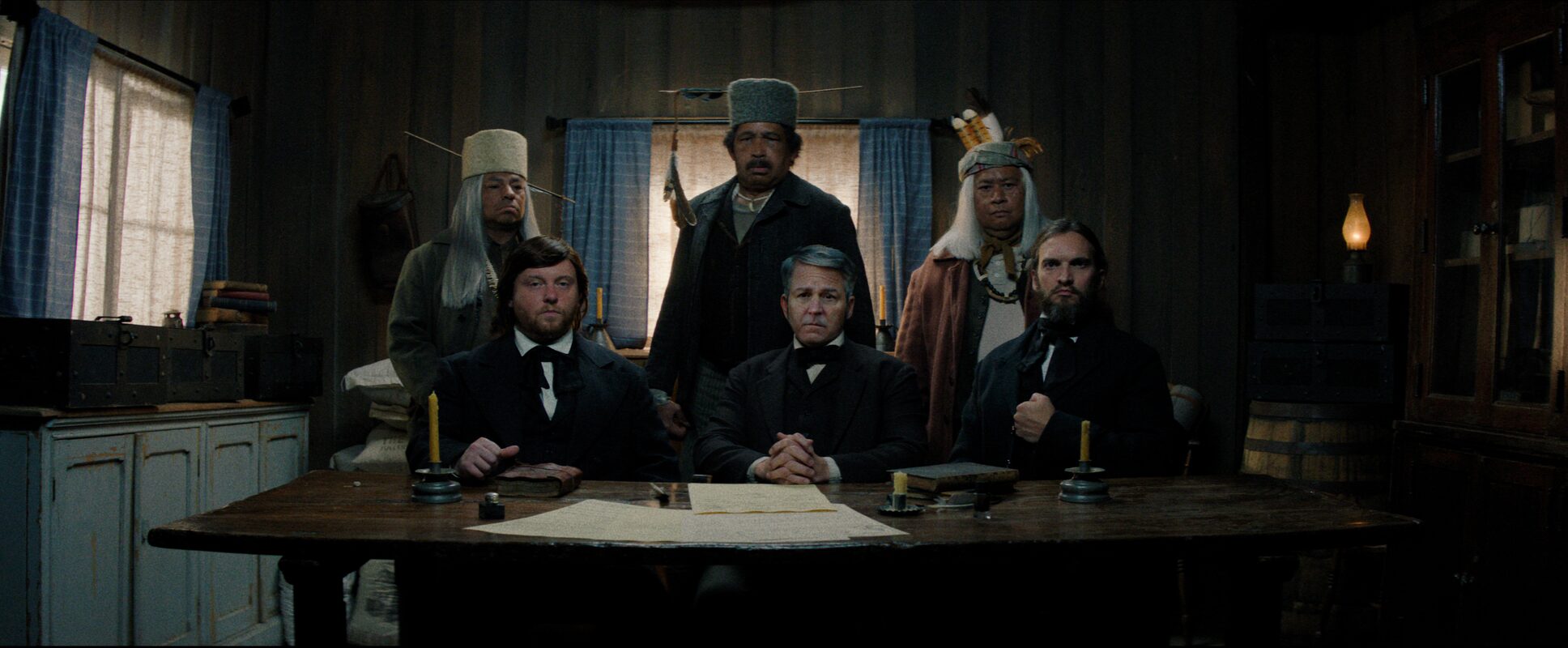
Chief Tenaya leads the Ahwahneechee in a desperate stand to defend their home in Yosemite Valley from James Savage and the Mariposa Battalion. Raids on trading posts spark all-out war, and federal treaty commissioners move to strip Native nations of their homelands, forcing them onto barren reservations. In the struggle between survival and surrender, Tenaya resists through strategy and defiance. Meanwhile in Southern California, tribes are forced to decide whether to fight American might, or try other tactics for survival. Rather than a story of pioneers taming wilderness, this chapter reveals Native determination to protect home and homeland against relentless conquest.
- Overview
- Standards Alignment
- Learning Objectives
- Essential Questions
- Episode Clips
This Land: Dispossession, Treaties, and Native Survival
This lesson explores treaties, forced removal, and the creation of reservations and national parks on Native homelands. Students challenge the myth of “pristine wilderness” and examine how Indigenous stewardship and land relationships persist despite dispossession.
Classroom Alignment
Grade Levels: 9-12
Subjects: Social Studies, History, Humanities, Ethnic Studies, Native American Studies, Environmental Studies
Duration: 1-3 Hours (can be extended into multiple lessons)
Unit Theme: Early California and Colonization
Standards alignment breakdown:
California History–Social Science Framework
California History-Social Science Analysis Skills
Common Core Literacy in History/Social Studies: Integrate visual, textual, and oral sources; determine point of view; support analysis with evidence.
Ethnic Studies Core Competencies: Critical thinking, community cultural wealth, historicizing power, and contemporary Indigenous presence.
Students will be able to:
Explain how federal and state policies enabled the forced removal of Native Californians from ancestral homelands and how treaties were used as tools of dispossession.
Describe ways Native people resisted removal and preserved cultural ties to their lands.
Analyze the myth of “pristine wilderness” and the creation of national parks on Native homelands.
Reflect on their own relationship to land, truth-telling, and responsibility to learn whose land they live on.
Essential questions for discussion:
How did the U.S. government and the state of California use treaties, reservations, and force to remove Native people from their lands?
How did Native people resist — physically, politically, and culturally?
How has the myth of “untouched wilderness” erased Native stewardship and survival?
How do these hidden histories shape what we owe to Native peoples today?
Access additional curriculum
The People of the West documentary series provides curriculum that centers California Native perspectives across time—from creation histories and first contact to contemporary movements for sovereignty, cultural revitalization, and environmental stewardship. Through film analysis, primary sources, oral histories, and critical discussion, students examine how Indigenous peoples have shaped California’s past and continue to shape its present and future.
Episode Clips
Clip 1 (~4 mins): This opening segment introduces Indigenous speakers Orona, Bommelyn, and Milanovich, who describe land not as property but as family and ancestor, showing how Native Californians relate to place through stories, care, and responsibility.
Clip 2 (~4 mins): This clip explains the roles of both state and federally-supported militias in stealing Native Californians’ land, the role of reservations, and the coercive threats settlers used to force Natives off their homelands, illustrating how militia violence and false promises went hand in hand.
Clip 3 (~8 mins): This clip centers on Antonio Garra’s plan to unite tribes to resist unfair taxes and land seizure. Scenes include Garra’s debate with Juan Antonio, betrayal by other Native leaders, and the government’s response at Camp Independence and Coyote Canyon, highlighting organized Native resistance and the consequences of broken agreements. It also covers media coverage.
Clip 4 (~2 mins): This clip explains the many forms of resistance that California Native American tribes engaged in to refuse the conditions of reservation life.
Clip 5 (~2 mins): This closing clip revisits Tenaya’s people returning to Yosemite, cuts to present-day scenes of Yosemite National Park, and features final reflections by Native speakers connecting the hidden history of broken treaties to today’s Land Back movements — challenging the “untouched wilderness” myth and showing Native survival and stewardship. It closes by inviting young people to take on the role of cultural stewards.
what people are saying
-
Audience Member
Everything I saw impacted me, but most of all seeing the truth told by our people.
-
A. Cooper
Thank you for this project! Glad to know that there is a toolkit available. I was in tears watching the trailer. Bravo.
-
F. Molina
This is amazing! I've been wanting this since the 90's when I started teaching.